
Your Guide To Sliding Gate Installation and Repair
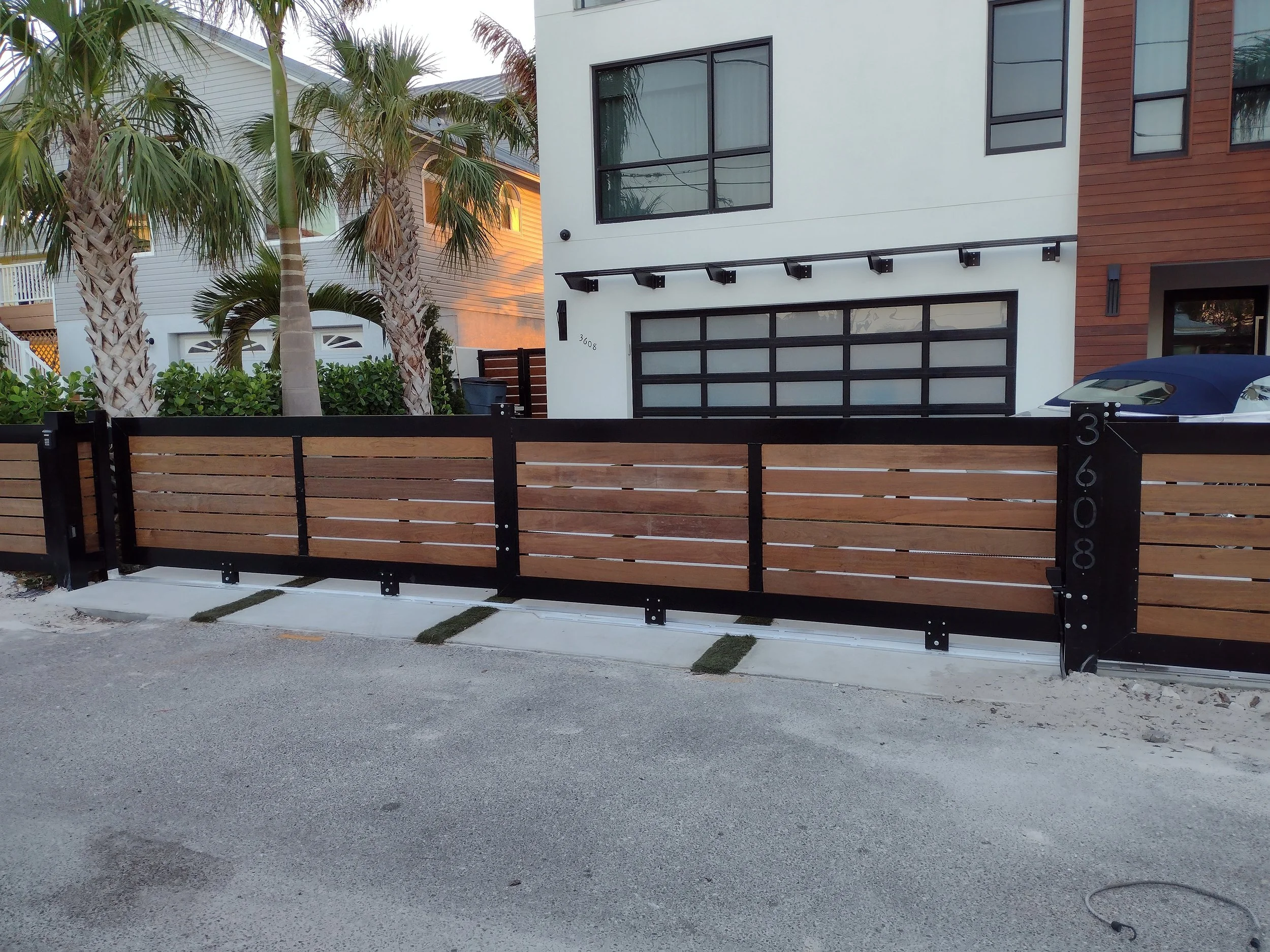
A sliding gate is a popular option for residential and commercial properties. Featuring a retractable, space-saving design, enhancing security, and unmatched versatility, these entry systems moderate traffic flow and safeguard your home or business. Today, we’ll discuss what sets a sliding gate apart from alternatives and explore installation and maintenance processes.
What is a sliding gate?
Unlike swing gates that open inward or outward and require moderate driveway depth, sliding gates glide along your fence for low-profile operation. Here’s what you need to know:
How does a sliding gate work?
There are two primary types of sliding gates: rolling and cantilever. Rolling gates use a roller system that moves the gate door along a ground-mounted track. They’re typically simple to install and cost-effective. Cantilever gates are suspended above the ground and glide along rollers fixed to a post or rail. They’re great for areas with uneven ground, snow, and debris accumulation, but they may be more expensive to install and maintain.
Can you automate sliding gates?
Absolutely! You can outfit almost any sliding gate with an automation system that enables access via smartphone apps, keyfob openers, keypads, and even biometric markers. You can also integrate security cameras to monitor activity at your entrance.
How much do sliding gates cost?
There’s a lot of variation in sliding gate pricing, and your overall cost will depend on several factors, including:
Pre-fab vs custom design: Custom sliding gates cost more, but they also offer greater curb appeal and improve property values more than basic alternatives.
Materials: Price will vary dramatically depending on whether you choose a wrought iron, aluminum, steel, or chain link gate.
Power supply: Electric gates may require additional wiring, trenching, and permitting.
Automation kit/operator: Brands like LiftMaster offer a wide range of motors and operators at different price points. While extensive automations can become very expensive, you’ll also find cost-effective solutions.
Installation and site prep: Sites with easy access, even terrain, and few trees or structural objects will demand lower site prep than rocky landscapes, sloped driveways, and existing concrete.
How is a sliding gate installed?
Let’s take a look at the installation process for a standard sliding gate:
Prepping the foundation
Before installing your gate, an experienced crew will take measurements, confirm your site has adequate lateral space, and then pour a concrete footing or pad to serve as the foundation. This slab may need to cure for five to seven days before hardware can be mounted.
Track installation
Rolling gates require a perfectly straight steel track for the rollers to glide across. It’s anchored or embedded into the concrete, and then tested to ensure it meets the precise specifications for your gate.
Wheel installation
For rolling gates, V-groove wheels or steel rollers are attached to the gate's bottom frame. Cantilever gates rely on roller carriages, which are mounted on support posts. Your installation crew will ensure accurate alignment to achieve smooth, quiet operation and enhance the lifespan of your motor.
Gate installation
Next, your gate will be lifted into position on the track or in the roller carriage and adjusted for proper level, vertical alignment, and ground clearance. At this stage, you can expect your gate to slide freely without wobbling.
Post and bracket installation
Guideposts and support posts will be installed to prevent swaying, tipping, and lateral movement. These are typically set in concrete and anchored deeply for optimal load-bearing capacity.
End stop installation
End stops are essential hardware components that prevent sliding gates from overextending or rolling off the track. They’re bolted or welded into positions at both ends of the railing or track.
Automation (optional, but highly recommended!)
While you could open and close your gate by hand every time you pass through, an automation system takes comfort, safety, and convenience to the next level. Your team will install a gate opener/operator mechanism and outfit your system with remote controllers, cameras, keypads, and other accessories you choose. Then, they will test the entire system to ensure seamless operation.
What happens if you need sliding gate repair?
If your gate suddenly stops working as expected, professional repair is your best bet for timely remediation. Here’s a look at the general process, step by step:
Starting with an inspection
Your technician will begin by asking what kinds of problems you’re having and inspect the entire system, including:
Track alignment
Roller condition
Gate frame sagging
Motor performance
Gear rack wear
Limit switches
Safety sensors
Electrical connections
Foundation integrity
Lubricating and adjusting tracks and parts
Friction and misalignment are common issues with sliding gates. Your specialist will clean any debris from the track, remove rust buildup, and lubricate rollers, bearings, hinges, and chain or rack systems. Then, they tighten the bolts and brackets, realign your track or guide rollers, and adjust the height or clearance for optimal functionality.
Component replacement
No matter how heavy-duty your materials are or high-quality your gate operator is, you’ll need to replace certain parts over time to keep things running smoothly. Your tech can identify work or broken parts and troubleshoot electrical components to find the source of the problem.
Testing and adjusting
The final step in gate repair is to ensure everything works properly. Your pro may perform a number of tests to verify excellent performance, including:
Manual sliding test
Full open/close cycles
Limit switch adjustments
Safety reversal checks
Photo eye alignment
Enhance your property with electric gate installation from Florida Gate Masters!
Ready to have your own sliding gate installed at your home or business? Reach out to Florida Gate Masters today!