
Your Guide to the Vertical Pivot Gate
Every residential and commercial property is unique, and securing your site may require a system that goes beyond a standard off-the-shelf solution. A vertical pivot gate operates a little differently than basic swing and sliding gates to ensure unrivaled protection and easy access. Join us to learn how these access control systems operate and the benefits you can enjoy from a customized installation.
What is a vertical pivot gate?
Vertical pivot gates combine the best features of boom gates and sliding gates in one fast, secure system. Here’s an overview:
How does a vertical pivot gate work?
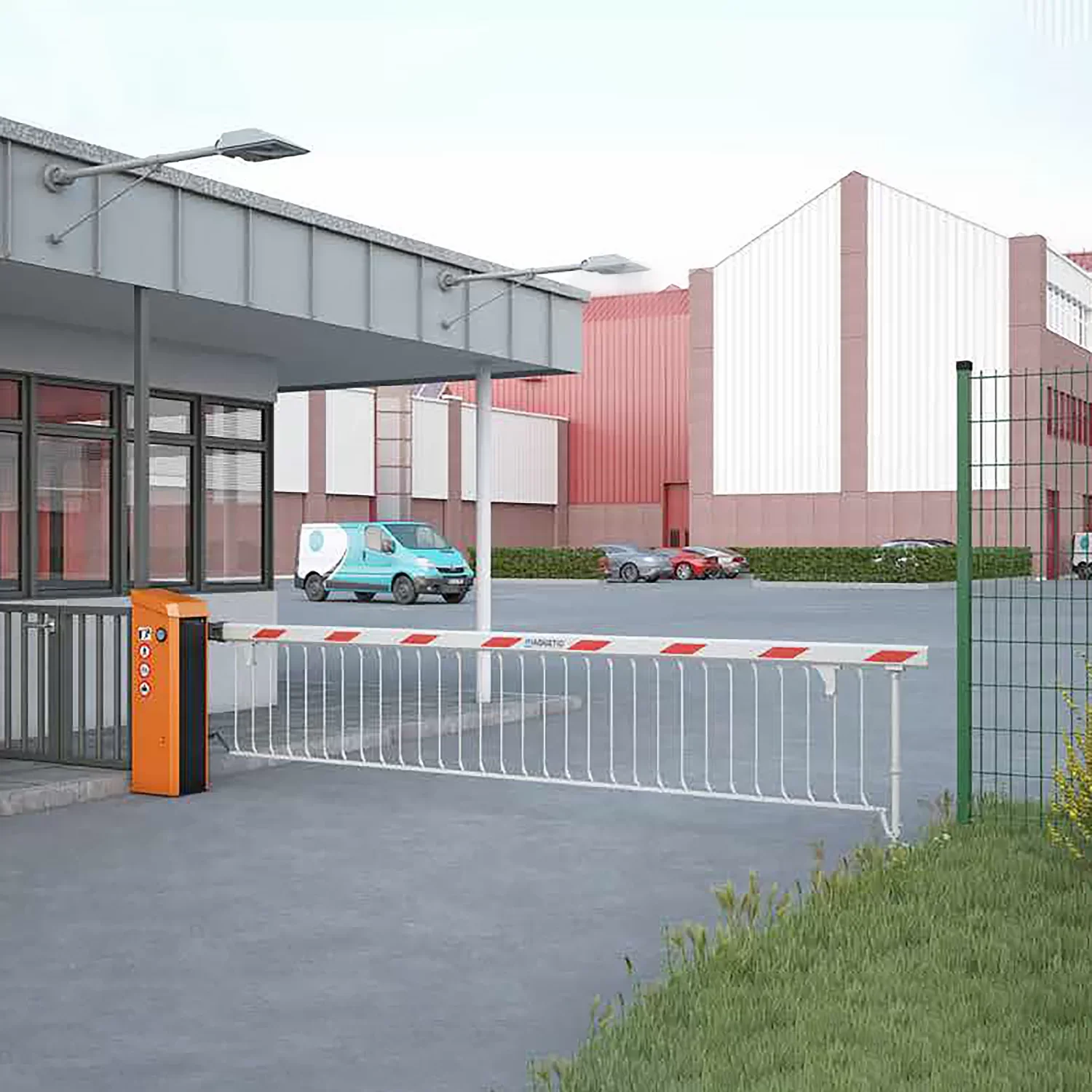
These access control systems use mechanical pivots, counterbalancing equipment, and an electric operator to open and close, allowing entry by lifting and rotating to an upright position.
When an authorized user requests access via a keypad, card reader, or other credentialing system, the motorized gate operator is activated. As the gate rotates, the lower edge lifts upward, and the barrier gradually becomes vertical, allowing a car to pass beneath. Once the safety sensors verify that the opening is clear, the gate lowers and locks in the closed position.
Essential parts and components
Unlike a vertical lift gate, a vertical pivot gate doesn’t require columns on either side of the entrance to raise the barrier. While each design varies by manufacturer, most include the same basic hardware:
Gate frame and infill
Pivot assembly
Counterweights, springs, or other balancing mechanism
Gate operator
Control panel
Safety devices
Access control devices
Safety and compliance
A vertical pivot gate can weigh hundreds or thousands of pounds, so proper safety is essential. Many manufacturers, such as Autogate, Tilt-A-Way, and TYMETAL, design their automated pivot gates to support UL 325-compliant entrapment protection and emergency operation. Depending on the model, they may incorporate safety features, such as photo eyes, manual emergency release mechanisms, warning lights, and audible alarms.
Key advantages of a vertical pivot gate
Vertical pivot gates offer a number of advantages over other swing and sliding styles – especially in commercial and industrial settings. Here are a few of the benefits you can expect:
Maximizes space efficiently
Sliding gates require ample space along a fenceline, and swing gates swivel open, demanding additional depth. But vertical pivot gates only need overhead clearance to operate. This makes them a great choice for a narrow driveway or property with buildings or equipment near the entrance.
Speed and throughput
Many automatic pivot gates can open and close in mere seconds, ensuring speedy access for high-traffic locations like parking garages. Quick operating cycles help reduce vehicle wait times, improve traffic flow, and minimize bottlenecks.
Terrain adaptability
Since they don’t rely on tracks or rollers that contact the ground, vertical pivot gates can be installed on nearly any terrain, including:
Uneven pavement
Gravel driveways
Sloped entrances
Additionally, they can operate reliably in areas that accumulate large amounts of debris, snow, ice, and standing water.
Low maintenance
Thanks to the absence of ground-level moving parts, these gates require much less manual upkeep. You don’t need to clean out leaf litter, twigs, and other debris that can inhibit operation. Instead, routine maintenance typically focuses on pivot bearings, counterbalance mechanisms, hinges, and other hardware.
Where is a vertical pivot gate commonly used?
Although vertical pivot gates are more common in commercial and industrial settings, you can find them in residential areas as well. Here are the most popular applications:
Self-storage facilities
Busy self-storage facilities see heavy auto traffic as tenants haul belongings to and from their units at all hours. A vertical pivot gate provides rapid access without sacrificing security. Because they operate quickly, stand up to frequent use, and integrate seamlessly with surveillance cameras, intercoms, and management software, they’re a great choice for active businesses.
Gated communities
Private, gated communities also benefit from a vertical pivot gate. By lifting above a single, small footprint, these gates don’t interfere with landscaping and aren’t limited by nearby structures, such as medians and guardhouses.
Luxury estates
Vertical pivot gates aren’t usually the first choice for residential installations, but they are popular for high-end, luxury homes. They offer strong perimeter security, smooth, quiet operation, and premium curb appeal. Additionally, these gates are highly compatible with smart home systems and advanced access control systems, enhancing their appeal to homeowners of sprawling, opulent properties who aren’t particularly concerned about cost.
Commercial and industrial sites
Commercial campuses, industrial facilities, and other high-security sites require access systems that balance speed, protection, and durability. Vertical pivot gates are well-suited to these conditions and are often installed at locations like:
Manufacturing plants
Distribution and logistics centers
Warehouses
Utility and energy facilities
Office parks
Government and municipal facilities
Data centers
Equipment yards
Enhance privacy and security with custom gates from Florida Gate Masters
A basic DIY gate kit may create the illusion of protection, but it may not protect your property in a worst-case scenario. Florida Gate Masters offers custom-designed access control systems to meet your needs. Learn more today!