Barrier Gate Installation: Steps, Costs, and Long-Term Benefits
Installing a barrier gate for your business, commercial parking lot, or HOA community enables greater control over safety, security, and traffic flow. But what does the actual installation process look like from start to finish? Join us for a beginner’s guide to barrier gate installation!
How is a barrier gate installed?
A reputable installation company will follow a regimented installation process to ensure your system meets your expectations. Here’s a step-by-step guide to our standard protocol:
1. Site assessment and planning
Before breaking ground on your barrier gate system, an experienced installation specialist will perform a thorough site inspection to determine the ideal location and configuration for your property’s needs, including:
Lane width and traffic flow
Vehicle volume and speed
Power availability
Drainage and flood risk
Safety requirements
Access control necessities
2. Foundation prep
Gate operators must be installed on a stable concrete foundation. In many cases, the site must be excavated and reinforced before the slab is poured. Foundation size varies depending on local soil conditions, drainage, and the specific barrier gate you choose.
3. Wiring and trenching
Installers typically place electrical wiring underground to protect it from weather and physical damage. This equipment connects the barrier gate and accessories to the main power supply.
4. Installing the housing
Once the concrete slab has cured, your team will position, level, and secure the barrier gate cabinet in place using anchoring bolts and other mounting hardware.
5. Attaching the arm
The boom arm is then connected to the gate operator and adjusted to ensure proper balance and alignment. During this process, installation specialists insert the arm into the drive mechanism, fine-tune counterweights and internal springs, and verify arm height and travel path.
6. Wiring and connection
Next, your team will connect the operator and all accessories to the control board before testing for performance and safety. Connections may include:
Main power supply
Grounding
Safety sensors
Loop detectors
Access control devices
Emergency stop controls
Battery backup systems
7. Integration and calibration
The final step of barrier gate installation is programming and configuration. Your crew will set operational speeds, adjust auto-close timing, and program devices such as RFID readers, keypads, and ticket systems. Then, they test each system for functionality and run repeated open/close cycles to ensure optimal efficiency.
Related: Your Guide To Sliding Gate Installation and Repair
What are the costs to install a barrier gate?
In Florida, a barrier gate installation can cost anywhere from $3,000 for a simple manual arm to $50,000 or more for a high-security or revenue-controlled system.
Total project costs
Factors influencing overall costs include:
Gate type
Boom arm length
Concrete foundation requirements
Length of electrical trenching
Access control integration
Safety accessories
Coastal corrosion protection
Permits and inspection fees
Automatic units
Automatic gate openers require a higher upfront investment because they include motors, control boards, and internal safety systems. They may also demand complex electrical work to support features like remote monitoring and smart controls. However, they can drastically improve safety and efficiency within a site.
Manual units
Manual barrier gates are more primitive, relying on physical control rather than electrical power. While they’re much less expensive to buy and install, they increase labor expenses and reduce efficiency.
Labor costs
Site complexity, long trench runs, excessive electrical connections, and smart integrations all increase the time and effort required to install a commercial electric gate.
Components
Your site specifications and security requirements will impact the right system configuration for your needs. For instance, a high-security facility may benefit from a heavy-duty, crash-rated barrier gate and a robust galvanized steel fence, while a small gated community may only need a lightweight arm that creates a better sense of safety for homeowners.
Related: Best Access Control Systems Comparison Guide
What are the long-term benefits of barrier gates?
Let’s explore the many benefits of barrier gates for commercial properties:
Enhanced security
Barrier gates don’t just serve as a visible deterrent to trespassers. They also physically restrict access, helping ensure that only authorized cars pass the threshold. Integrated keypads, RFID readers, and license plate recognition systems further enhance security.
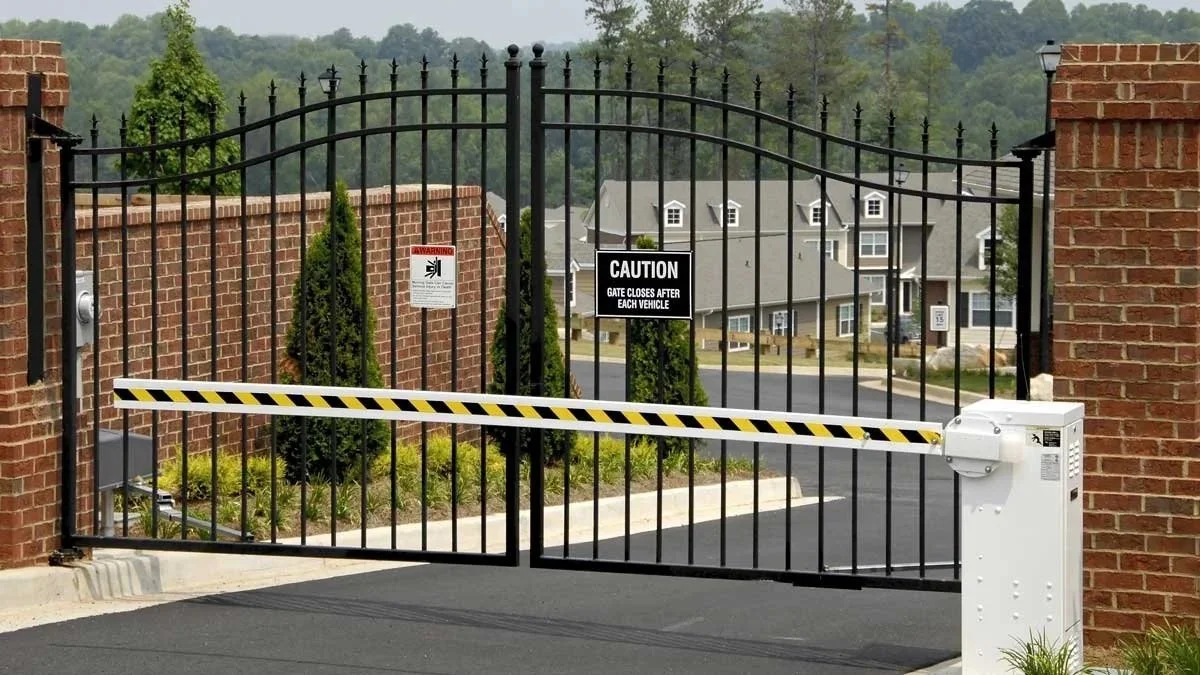
They also create a record of entry and exit events. A barrier gate alone is adequate security for many businesses, but others may want to install these systems alongside full-time staff and heavy-duty metal fences.
Better traffic management
Unlike swing gates and lift gates, barrier gates are designed to maximize traffic flow. They direct vehicles into designated lanes, regulate entry and exit for crowd control, and improve safety for both drivers and pedestrians.
Lower labor costs
An automated barrier gate can reduce labor costs by:
Reducing or supplementing gate attendants
Reducing overtime hours
Minimizing human error
Allowing existing security staff to focus on higher-priority tasks
Higher ROI
Enhanced efficiency, reduced losses, and lower operating costs can offset installation and maintenance expenses, ultimately delivering a strong return on investment.
Data collection
Automated barrier gates can provide a wealth of information about vehicle activity to help you make informed decisions about staffing, parking policies, and security planning. Data may include:
Entry and exit times
Vehicle counts
Peak traffic periods
Credential usage
Occupancy trends
Increased property value
Many business owners and investors understand the inherent benefits of barrier gates, such as controlling access and improving efficiency. But these systems also increase tenant and resident satisfaction, improve curb appeal, and create a stronger perception of safety.
Related: Professional Electric Gate Installation: Costs and Benefits
Florida Gate Masters is Tampa Bay’s best in residential and commercial gate installation
From loading docks and industrial facilities to senior living communities, the right barrier gate can improve operational efficiency and safety. Discover the ultimate access control system for your needs today with help from Florida Gate Masters!